


How to Throw a Hook in Boxing (Power and Technique)
The hook is one of the most powerful punches in boxing and one of the easiest to throw wrong. Done right, it turns your whole body into the punch and lands from an angle your opponent never sees coming. Done wrong, it swings wide, drops your guard, and leaves you open. In this guide you will learn the correct hook mechanics, a checkpoint table to clean up your form, the drills that sharpen it, and the training gear that adds real hand speed and power.
What makes the hook so dangerous?
A jab and a straight travel in a line, so a trained opponent can see them and block down the middle. A hook comes around the side. It slips past the guard and lands on the chin or the body from an angle that is hard to defend. That is why so many knockouts come from a well placed hook.
The secret is that a hook is not an arm punch. The power starts at the floor. You drive off your foot, pivot, and rotate your hips and shoulder into the target. Your arm just delivers the force your lower body creates. When beginners try to muscle a hook with the arm alone, it lands soft and leaves them off balance. Learn to turn your body into the punch and the hook becomes a fight ender.
What are the keys to a proper hook?
Break the hook into checkpoints and clean up one at a time. Small errors here are the difference between a wide slap and a short, heavy shot.
| Checkpoint | What to look for | Common mistake |
|---|---|---|
| Elbow angle | Elbow bent near ninety degrees, arm short and tight | Swinging with a long, straight arm |
| Pivot | Pivot on the lead foot as you turn | Flat feet that kill the rotation |
| Hip rotation | Hips and shoulder turn into the target together | Punching with the arm only |
| Guard | Rear hand stays high to protect the chin | Dropping the other hand while you punch |
| Snap and return | Land, then bring the hand straight back to guard | Leaving the hook out and getting countered |
How do you add hand speed and power to your hook?
Fast hands make a hook land before your opponent can react, and a strong upper body makes it hurt when it does. Training with light adjustable weights builds both. Weighted gloves add resistance to your shadow boxing and combinations, so your shoulders and arms learn to move faster and recover quicker. Take the weights off and your hands feel lighter and snappier than ever. They work for boxing, and they carry over to basketball, football, and baseball too.
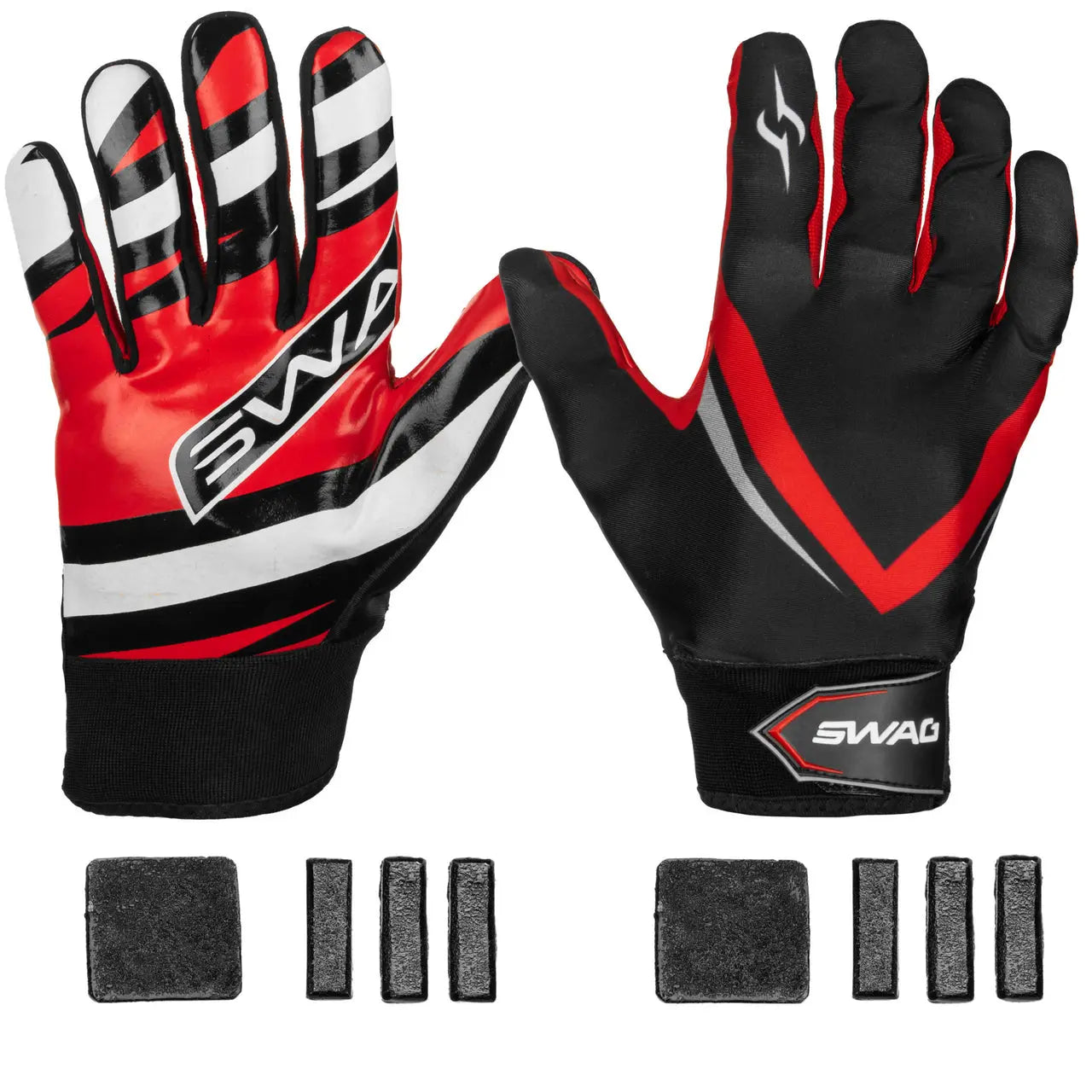
S.W.A.G. Adjustable Weighted Gloves
Add finger weights to your shadow boxing to build the hand speed and shoulder power a sharp hook needs.
Which drills sharpen your hook?
Groove the pivot and rotation slowly, then add speed and combinations. Never sacrifice the return to guard just to hit harder.
Hook questions coaches ask
Should my palm face down or toward me?
Both work and coaches differ. The most important things are a bent elbow, a strong pivot, and a wrist that stays firm on contact so you do not injure your hand.
Why does my hook feel weak?
You are probably arming it. Drive off your foot, pivot, and turn your hips and shoulder into the punch so your whole body adds to the force.
How do I keep from getting countered?
Keep your other hand glued to your chin and bring the hook straight back to guard the instant it lands. Never leave it hanging out there.
Lead hook or rear hook, which do I learn first?
Start with the lead hook. It flows naturally off the jab and teaches the pivot and rotation you will use on every hook you throw.
Faster hands, heavier hooks
Build the speed and power behind a fight ending hook.
Tags: boxing, hook, punching technique, combat sports, hand speed, weighted gloves