

How to Jump Higher in the High Jump Like Mutaz Barshim
Mutaz Barshim clears world class heights because he blends a fast curved approach with a powerful one foot takeoff and a clean arch over the bar. The height itself comes from explosive single leg power and a run up that loads your body like a spring. Train the takeoff leg, sharpen the curve, and drill the plant, and your personal best will start climbing.
What makes a great high jumper?
High jump height is built from four things: approach speed, a strong single leg takeoff, explosive leg power, and the technique to turn all of it into lift over the bar. Barshim is not the biggest athlete on the runway, but he converts a controlled, fast curve into an enormous vertical push off one foot. That is the skill that separates great jumpers, the ability to plant hard and send that speed straight up.
For your own jumping, that means two jobs. Build explosive single leg power in the weight room and on the track, and drill a repeatable approach so you arrive at the bar balanced and ready to spring. Power without a clean approach is wasted, and a clean approach without power will not clear much.
Technique over the bar matters too, but it comes last. The Fosbury flop, where you arch your back and clear the bar head first and face up, lets you get your center of mass as low as possible while your body still clears the height. It is worth drilling, but only after you have a fast approach and a strong plant. A great arch over a weak takeoff still leaves the bar on the ground.
How does the approach create height?
The curved run up, often called the J curve, is what lets you lean away from the bar and swing your drive leg and arms up hard at takeoff. Get these pieces right and the bar starts to look low.
| Element | Common mistake | Fix |
|---|---|---|
| Curve of the run up | Running straight at the bar | Run a smooth J curve to lean inside |
| Approach speed | Too slow to generate lift | Build controlled speed into the curve |
| Penultimate step | No gather before takeoff | Lower the hips to load the plant leg |
| Takeoff plant | Soft, collapsing knee | Plant tall and stiff, then drive up |
| Drive knee and arms | Lazy swing up | Drive the lead knee and both arms hard |
Most young jumpers run too slow and too straight, then try to muscle over the bar. Flip that. Trust a faster curve, gather on the second to last step, and let a hard, tall plant turn your speed into height. The arch over the bar is the last piece, not the first.
A simple way to build a consistent approach is to count your steps and mark your start. Use an even number of strides, start from the same spot every time, and run the curve the same way on every attempt. When your approach repeats, your plant lands in the right place, and that is when the big jumps start to show up.
Can resistance band jump training raise your high jump?
Yes. High jump takeoff is explosive single leg power, and resisted jump training builds exactly that. A waist to heels band system adds downward resistance as you jump, so your hips and legs learn to push harder and faster into the ground. Use it for your jump squats and bounding two or three days a week on fresh legs, then test your jumps without it and feel the extra pop off the floor. The carryover to your takeoff is direct.
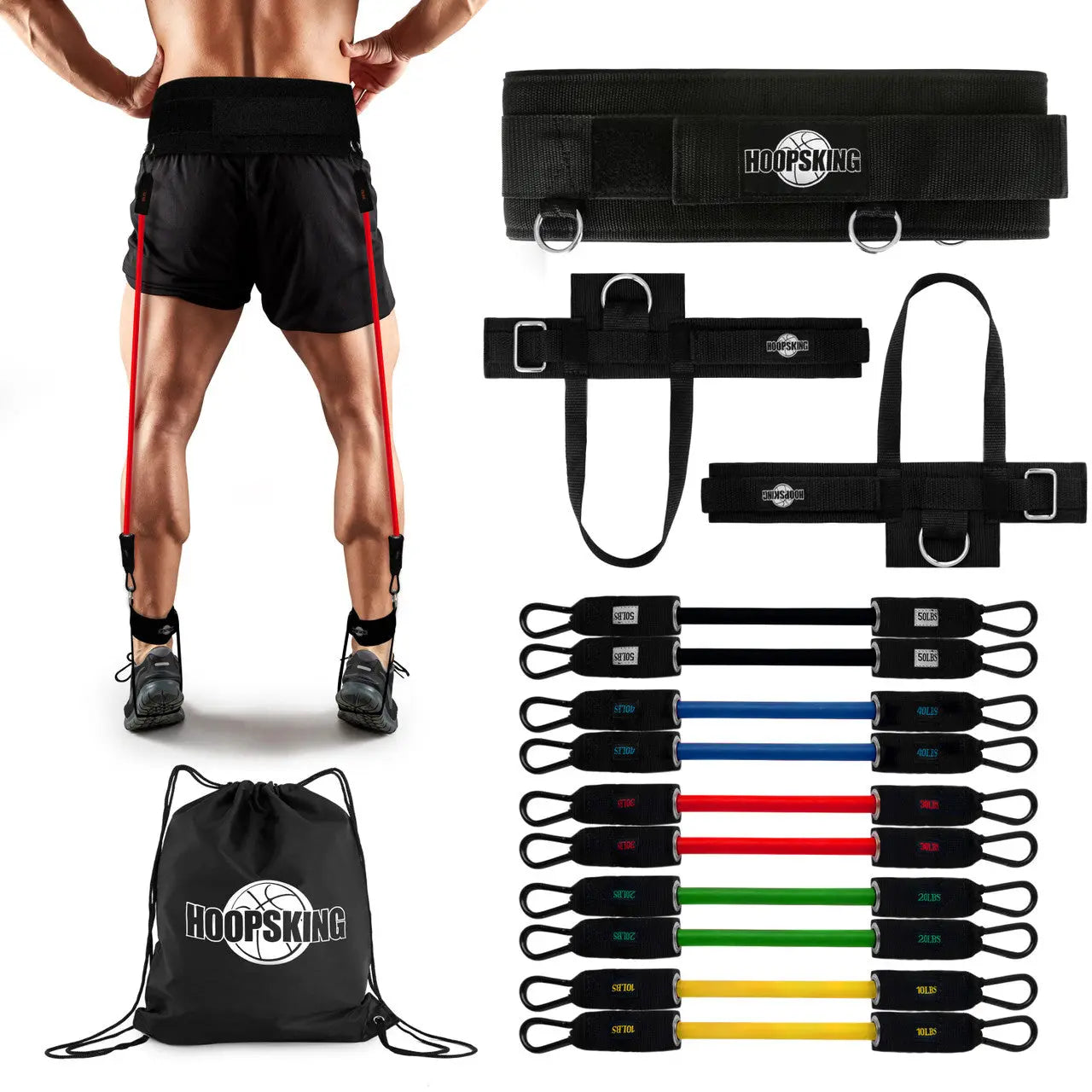
HoopsKing Vertical Jump Trainer Resistance Bands
A waist to heels band system that overloads every jump, so your takeoff leg learns to fire harder and faster for a bigger high jump.
What drills build a bigger high jump?
Run this two or three times a week on fresh legs, never after a hard meet. Every jump should be a true max effort with a soft, controlled landing.
High jump questions athletes ask
What is the most important part of the high jump?
The takeoff. A fast curve sets it up, but the hard, tall plant off one foot is what turns your speed into height. Spend most of your drill time there.
Why do high jumpers run a curved approach?
The J curve lets you lean away from the bar and rotate into the flop, so you can drive straight up and arch your back over the bar instead of jumping into it.
How do I jump higher off one leg?
Train single leg power with bounds, step ups, and resisted jumps, and practice a stiff, tall plant so your leg does not collapse at takeoff.
How often should I do jump training?
Two or three days a week on fresh legs. Explosive work needs recovery, so keep the sessions short, intense, and well away from meet day.
How long until my high jump improves?
Most athletes feel more pop in 4 to 6 weeks and clear new heights within a focused season as power and approach come together.
Turn a fast approach into real height
Add resisted jump training to your week and clear your next personal best.
Tags: high jump, track and field, Mutaz Barshim, vertical jump, jump training, resistance bands