

How to Improve Your Catcher Pop Time and Throw Out Base Stealers
Pop time is how long it takes from the moment the pitch hits your mitt to the moment your throw reaches the fielder's glove at second base. To lower it, you win in three places: a lightning quick exchange from mitt to hand, clean footwork that gets your body behind the throw, and an accurate, carrying throw to the bag. Elite catchers do all three in under two seconds. The good news is that pop time is trainable, and most of the time you save comes from the transfer and the feet, not from throwing harder.
What is a good pop time for a catcher?
Pop time is measured in seconds and the target depends on your level. A 2.0 second pop time is the pro gold standard, but you do not need to be there to control the running game at youth and high school levels. Know your benchmark, time yourself honestly with a stopwatch or phone, and chase small improvements. Shaving even two tenths of a second is often the difference between a runner sliding in safe and getting tagged out.
| Level | Solid pop time | Elite pop time |
|---|---|---|
| Youth (12U) | 2.7 to 2.9 sec | Under 2.6 sec |
| High school | 2.2 to 2.4 sec | Under 2.1 sec |
| College | 2.0 to 2.1 sec | Under 2.0 sec |
| Pro | 1.9 to 2.0 sec | Under 1.9 sec |
What footwork gets the fastest throw to second?
Your feet win or lose the pop time before you even throw. Two footwork patterns dominate. The replace step is the standard: your right foot replaces where your left foot was, gaining ground toward the mound as you turn. The jab step, or jump pivot, is quicker to release but gives up a little power, so it fits catchers with strong arms.
Whichever you use, the keys are the same. Stay low, gain ground toward second, and get your chest and throwing shoulder pointed at the target. Do not stand tall first and then throw. The best catchers explode out of the crouch and let the throw come out of a compact, athletic base.
Set your feet up to win before the pitch even arrives. With a runner on first, many catchers widen their stance slightly and load a touch more weight on the right side so the first move is toward second, not backward. Small pre pitch tweaks like that remove wasted motion, and wasted motion is exactly the time a fast runner uses to steal the bag. Rehearse your setup until it feels automatic so you are not thinking about your feet in the middle of a play.
How do you speed up the mitt to hand exchange?
The transfer is where most catchers hide free time. If your hands are slow or sloppy pulling the ball from the mitt and finding a four seam grip, the fastest feet in the world will not save your pop time. Great catchers train their hands to work in a tight box near the center of the chest, snapping the ball out and getting a clean grip in one quick motion.
You build that hand speed with reps and with resistance. Training your hands and fingers under a little extra load teaches them to fire faster and grip stronger, so when the weight comes off, the exchange feels instant. That is exactly what weighted gloves are made for, and they carry over to blocking recovery and framing strength too.
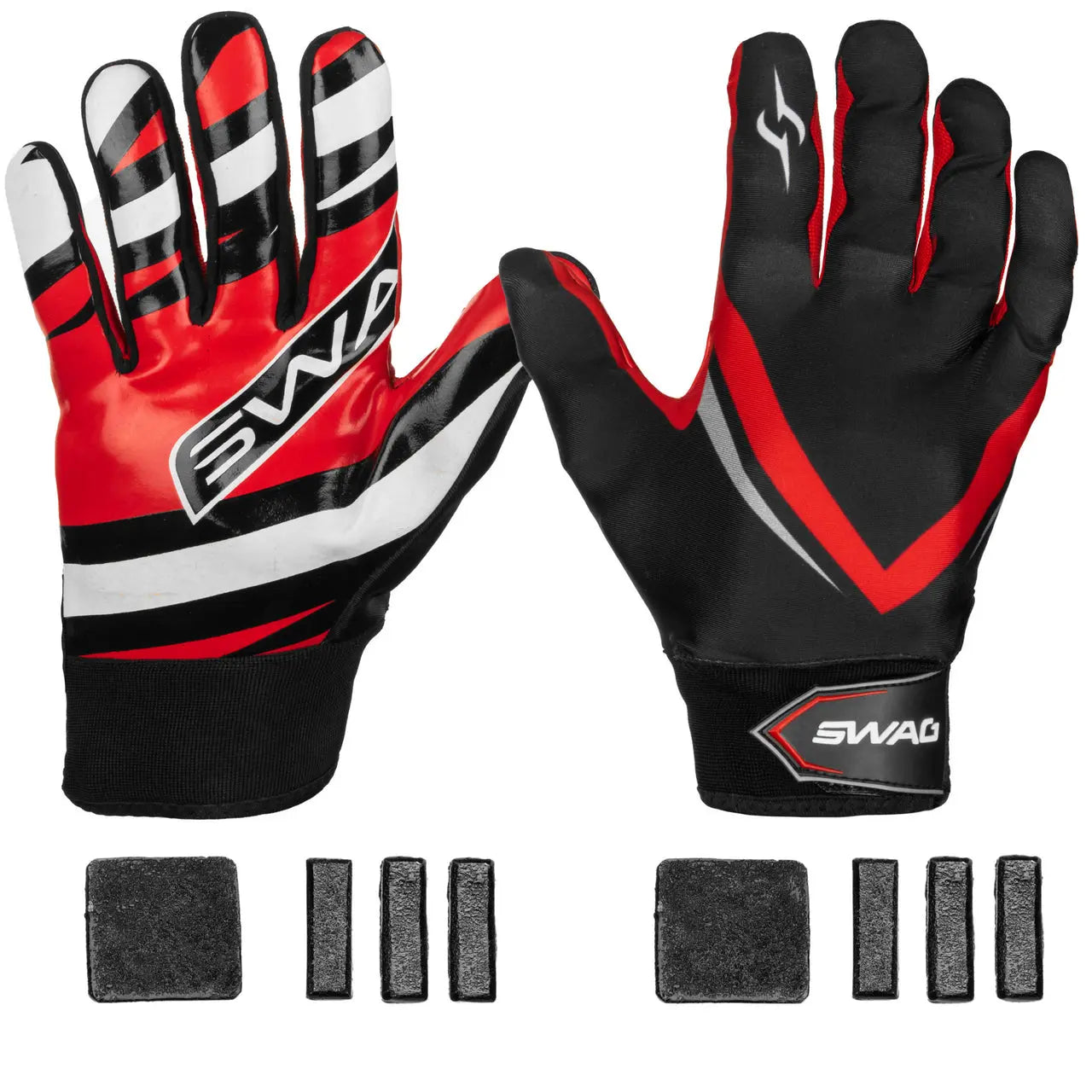
S.W.A.G. Adjustable Weighted Gloves
Train faster hands and a stronger grip for a quicker mitt to hand transfer behind the plate.
What drills lower your pop time?
Train the exchange and the feet separately, then put them together. Do these two or three times a week and time yourself so you can see progress.
Catcher throwing questions coaches ask
Does throwing harder lower pop time the most?
No. The biggest gains usually come from a faster transfer and cleaner footwork. Arm strength matters, but you cannot out throw a slow exchange.
Replace step or jab step, which is faster?
The jab step releases a touch quicker but with less power. The replace step gains more ground and drives the throw. Pick the one that fits your arm and rep it until it is automatic.
How do I make my throws more accurate?
Point your front shoulder and glove side at the target, stay tall through the release, and finish toward second base. Accuracy beats velocity for actually recording outs.
How often should I train pop time?
Two to three focused sessions a week is plenty. Quality reps with rest beat grinding your arm every day, which only leads to fatigue and worse throws.
Faster hands, quicker pop time
Build the hand speed and grip strength behind a lightning fast transfer with adjustable weighted gloves.
Tags: baseball, catcher, pop time, throwing, softball, weighted gloves