

How to Hit a Faster Serve Like John Isner
A faster serve comes from a smooth kinetic chain, not from swinging harder. To serve like John Isner, one of the biggest servers the sport has seen, you load your legs, uncoil your hips and trunk, and whip the racquet up to the ball with a loose arm and a snapping pronation at contact. Speed is built from the ground up and released at the very top. Below is the full breakdown, the drills that add real MPH, and the tool that sharpens the hand speed your serve depends on.
What actually makes a tennis serve fast?
Serve speed is a chain reaction. It starts when you bend your knees and load into the court, flows up through your hips and trunk as you uncoil, and ends with your arm and wrist whipping the racquet up and out at the ball. Each link adds speed to the next, so the racquet head is moving fastest at the exact moment it meets the ball. Players who try to muscle the serve with just their arm skip the biggest links in the chain and top out well short of their potential.
John Isner built a career on this. At well over six and a half feet tall he has leverage, but what makes his serve so fast is timing: everything releases in sequence, and the racquet head accelerates late. You do not need his height to borrow the lesson. Load your legs, stay loose, and let the speed build and release at the top rather than forcing it early.
Rhythm matters as much as effort. A serve that rushes from the start runs out of speed before contact, while a smooth, unhurried motion lets each link hand off to the next and peaks at the ball. Think of it like cracking a whip: slow at the handle, fastest at the tip. Your legs and trunk are the handle, and the racquet head is the tip.
Where does serve speed come from?
It helps to see the serve as a stack of parts that each add speed. If one link is weak or out of sequence, the whole serve slows down. Here is what each part contributes and the cue that fires it.
| Link in the chain | What it adds | Key cue |
|---|---|---|
| Legs and knee bend | Upward drive and energy into the court | Load down, then explode up |
| Hips and trunk | Rotation that turns drive into racquet speed | Uncoil toward the target |
| Shoulder and arm | The whip that carries the racquet up | Stay loose, lead with the elbow |
| Wrist and pronation | The final snap of racquet head speed | Pronate and snap through contact |
Notice the last link is all hand and wrist. That final snap is where a lot of free speed hides, which is why training quick, strong hands pays off on the serve.
How do you get more racquet head speed at contact?
Racquet head speed is the number that actually decides how fast the ball leaves your strings. It comes from a relaxed arm and a fast, strong wrist that snaps into pronation as you reach up to the ball. A tight grip or a stiff wrist kills that snap, so the fix is to build hand and forearm speed and strength, then stay loose and let the racquet accelerate on its own. Quick hands make the racquet feel light, and a light racquet moves fast.
Training your hands under a little added load is a simple way to build that speed off the court. Warm up with weighted gloves, take them off, and the racquet feels quicker through the hitting zone.
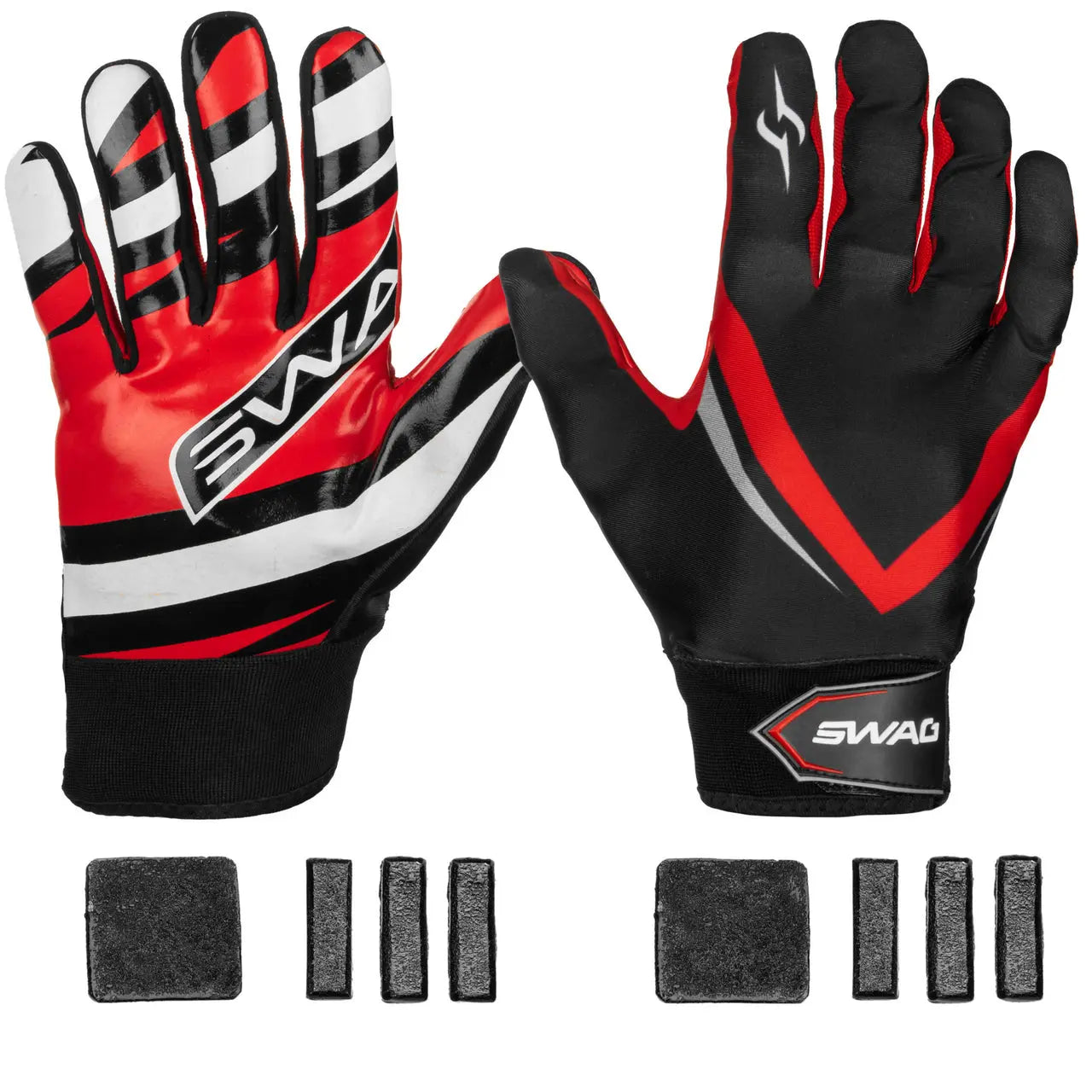
S.W.A.G. Adjustable Weighted Gloves
Adjustable finger and hand weights build the grip strength and wrist speed that power your pronation and racquet head speed at contact.
What drills add MPH to your serve?
Add speed by training the chain in order, then putting it all together. Work through these.
Serve speed questions players ask
Why is my serve slow even though I swing hard?
Swinging hard with a tight arm actually slows the racquet. Stay loose and let the chain build speed, so the racquet whips up to the ball instead of being forced.
How important is the toss for a fast serve?
Very. A consistent toss out in front lets you hit up and through the ball with full extension. A bad toss makes you reach or arm the serve.
What is pronation on the serve?
It is the forearm turning over at contact so the strings snap through the ball. It is the last and fastest link in the chain and a big source of free speed.
Do I need to be tall to serve fast?
Height gives leverage, but timing and racquet head speed matter more. Plenty of average-height players out-serve taller ones with a better chain.
How do I add speed without losing control?
Build speed from your legs and trunk first, and keep your contact point out front. Control comes from a repeatable motion, not from slowing your arm down.
Add real speed to your serve
Faster hands mean a faster racquet and more free MPH on every serve.
Tags: Tennis, Serve, Faster Serve, John Isner, Racquet Head Speed, Weighted Gloves