

Weighted Gloves Soccer: Boost Your Game with This Training Secret
Adjustable weighted gloves add resistance to arm and shoulder movement, which is why some soccer players reach for them when training long throw-ins — and why goalkeepers, who use their hands more than anyone else on the field, are especially drawn to them. Here's how the training secret works, who benefits most, and how to use it safely.

How Can Weighted Gloves Help With Soccer Throw-Ins?
A long, accurate throw-in can restart an attack in a hurry, and the arm strength behind it can be trained. Wearing weighted gloves during throwing drills makes the arms, shoulders, and core work harder against the added resistance on every rep. Over time that extra load can build the upper-body strength behind a throw, while many players also notice their arms feel quicker and lighter once the gloves come off.

Are Weighted Gloves Especially Useful for Goalkeepers?
Goalkeepers use their hands far more than any other position on the field, which makes them a natural fit for this kind of training. Building strength, speed, and endurance in the forearms and shoulders can support quicker reflexes and more power behind a save or a distribution throw. As with any resistance tool, the gains come from consistent, moderate use — not from training with the heaviest setting right away.

How Does Added Weight Change a Throwing Movement?
Adding weight of any kind changes how a movement feels, so it's worth knowing what to watch for before building weighted-glove work into a training plan.
The added load increases demand on the muscles, which can mean quicker fatigue and a need for longer recovery between sessions.
Extra weight can nudge a throwing motion out of its normal groove; keep an eye on form so it doesn't drift over time.
Too much weight, too soon, can add extra stress to the shoulder, elbow, and wrist joints — another reason to progress gradually.
Train With Adjustable Weighted Gloves

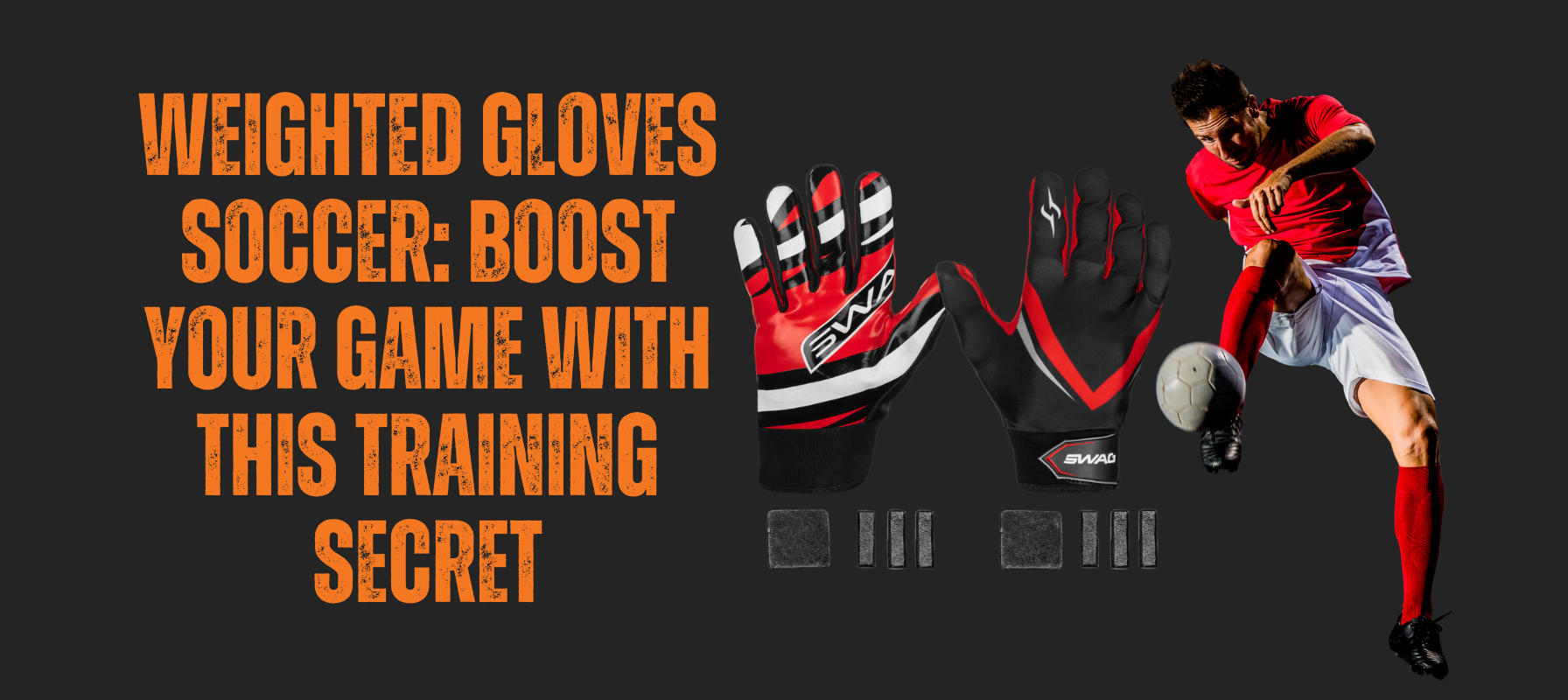
S.W.A.G. Adjustable Weighted Gloves
Adjustable finger and hand weights let soccer players and keepers dial in resistance for throw-in and hand-strength drills.
How Do You Choose the Right Weighted Gloves for Soccer?
Most weighted gloves add somewhere between one and four pounds total, and the fit matters as much as the weight itself.

What Are Some Precautions and Best Practices?
Weighted-glove training works best as a gradual, supporting piece of a normal training plan rather than the whole plan.

Weighted Gloves for Soccer FAQ
Weighted gloves aren't typically worn during standard competitive matches — they're a practice-only training tool used to build strength between games.
Used the right way as part of a training routine, they can help players get stronger, quicker, and more coordinated over time.
Most options add a total of one to four pounds. Start at the lighter end and increase gradually as strength builds, rather than starting heavy.
Goalkeepers use their hands more than any other position, so many find extra value in hand and forearm strength work with weighted gloves.
Yes — basketball, baseball, MMA, golf, tennis, football, and track and field athletes use them too, generally for similar strength, speed, and endurance gains.
Adding too much weight too quickly can strain the shoulder, elbow, and wrist joints and change your throwing form. Progress gradually and rest between sessions.
Build Throwing Strength With Weighted Gloves
Whether it's a long throw-in or a goalkeeper's distribution, an adjustable pair of weighted gloves lets players and coaches set the resistance to match their training level and build from there.