



How to Serve Faster in Tennis: Add Racket Head Speed
A faster serve does not come from swinging harder. It comes from stacking the right moves in the right order so the racket whips through contact. If you want to serve faster in tennis, you build a clean toss, load your legs, and let the arm stay loose so the racket head accelerates late. Do that and you add real MPH without adding effort.
What actually makes a tennis serve fast?
Serve speed is a chain reaction. The biggest servers on tour do not have the biggest arms, they have the best sequence. Power starts from the ground, moves up through the legs and hips, travels through the trunk and shoulder, and finishes with a loose, fast forearm and wrist. Coaches call this the kinetic chain, and every link that leaks energy costs you MPH.
The last link matters most. Racket head speed at contact is what turns all that stored energy into ball speed. That is why a relaxed arm beats a tense one every time. A tight grip and a stiff wrist slam the brakes on the racket right when it should be accelerating. Loose and fast wins. Think of cracking a whip, not swinging a hammer.
Grip matters too. A continental grip, the same one you use to hammer a nail, lets the forearm and wrist roll freely through the ball so you can hit up and out with spin and pace. Slide toward an eastern or forehand grip and you lose that snap, which caps your speed and flattens the serve out. Get the grip right first, then let the chain do its job. When every link fires in sequence, the ball jumps off the strings and the serve feels almost effortless even though it is moving faster than ever.
Which serve mistakes cost you the most speed?
Most players lose serve speed to a handful of fixable errors. Find yours in the table below, make the fix, and you will feel the difference in a single practice session.
| Common Mistake | The Fix | Why It Adds Speed |
|---|---|---|
| Tossing too far in front | Toss slightly in front and to the right so you hit up and out | Lets you drive up into the ball instead of reaching |
| No leg bend | Load into a knee bend and push straight up | Legs add force that travels up the chain |
| Tense, muscled arm swing | Keep a loose grip and let the arm relax until contact | A loose arm lets the racket head accelerate late |
| No pronation at contact | Let the forearm and wrist snap and roll through the ball | Pronation is the final burst of racket head speed |
| Stopping the swing early | Finish long across the body | A full finish means you never decelerated into contact |
Can training tools build a faster serve?
Racket head speed is a trained quality. Your hands, wrists, and forearms need to move fast and stay relaxed under load, and that is exactly what light resistance builds. Train the swing pattern with a little extra weight on the hands, then take it off, and the racket feels lighter and whips faster. Keep the reps short and crisp so you never groove a slow, heavy motion. The same tool doubles as a warm up on match day. A few shadow serves with light hand weight wakes up the fast twitch muscles in your forearm and wrist, then you strip the weight and your first serve comes out hot from the very first game.
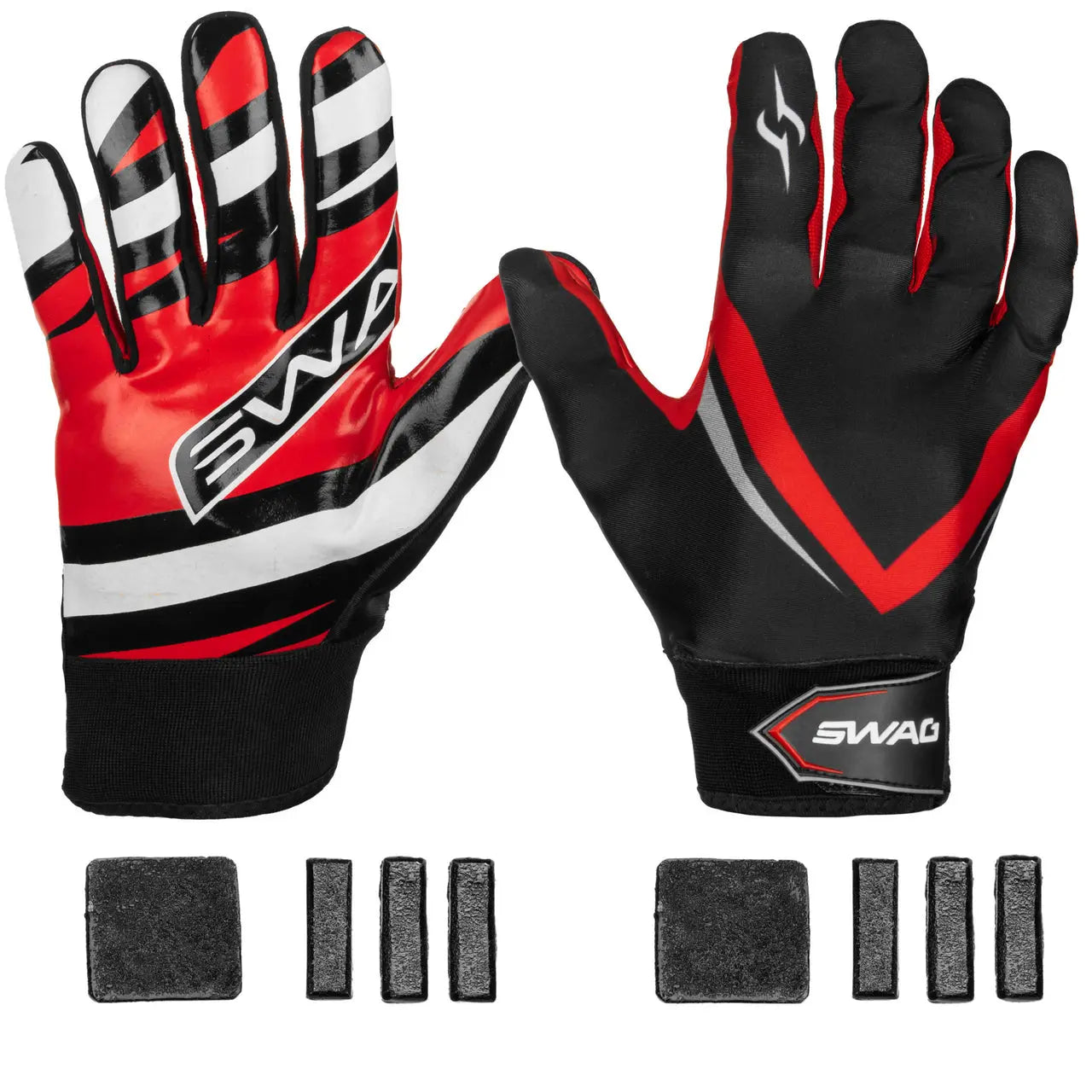
S.W.A.G. Adjustable Weighted Gloves
Add light, adjustable weight to your hands to train fast, relaxed wrist and forearm action for more racket head speed on serve.
What drills build a faster serve?
Speed shows up when the pattern is automatic. Run these in order, a few minutes each, and stay relaxed the whole time.
Faster serve questions players ask
Will swinging harder make my serve faster?
No. Muscling the arm creates tension that slows the racket. Speed comes from a loose arm and good sequencing, not brute force.
How much does the toss matter?
A lot. A steady toss lets you hit up and out with full leg drive. A bad toss forces you to slow down and adjust mid swing.
What is pronation and why does it matter?
Pronation is the natural roll of the forearm and wrist through contact. It is the last and fastest burst of racket head speed on a good serve.
How long until I see more MPH?
Most players feel a looser, faster swing within a week or two of focused reps. Building it into match serves takes consistent practice.
Should I try to add spin or just hit flat?
Learn to hit up on the ball with spin first. Spin gives you margin over the net and control in the box, and a strong kick or slice serve is often harder to return than a flat one you cannot land.
Does string tension change serve speed?
It can. Slightly lower tension gives a bit more power from the string bed, while higher tension gives more control. Small changes matter, so test and find the setup that lets you swing fast with confidence.
Train a Faster Serve
Build fast, relaxed hands and add real racket head speed.
Tags: Tennis, Serve, Racket Head Speed, Tennis Training, Serve Speed, Weighted Gloves