

How to Jump Higher for Volleyball: Hit and Serve Above the Net
A bigger vertical lets you swing down over the block, reach higher on the jump serve, and get your hands over the net on a block. The fastest gains come from a strong three step approach, explosive single effort jumps, and resisted jump training that teaches your hips and legs to fire harder. Train the approach and the strength together and most players add real inches in a season.
What actually makes you jump higher in volleyball?
Your vertical is a mix of three things: the force your legs can produce, how fast you produce it, and the technique that turns that force into height. Most players ignore the first two and wonder why practice alone does not help. Real jump height comes from strong hips, glutes, and calves, plus the ability to fire them in a split second. That is why strength work and explosive jump training matter as much as reps at the net.
Technique is the multiplier. A good approach lets you convert horizontal speed into vertical lift, and a hard double arm swing can add several inches on its own. Train the engine and the technique together and the ceiling goes up quickly.
One more point that players miss: landing matters as much as jumping. Learning to land soft and balanced protects your knees and ankles over a long season, and it lets you jump again on the very next play without losing power. Treat every landing in training as part of the rep, not an afterthought.
How does the approach change your jump height?
The approach is where most hitters leave inches on the floor. The three step and four step approaches both end the same way: a big penultimate step to gather, a hard plant, and a double arm swing up. Here is how the pieces compare so you know what to drill.
| Element | Common mistake | Fix |
|---|---|---|
| Penultimate step | Too small, no gather | Long and low to load the legs |
| Last two steps | Slow and flat footed | Quick right then left, heel to toe |
| Arm swing | Arms stay low | Swing both arms back then hard up |
| Takeoff | Jumping forward | Convert speed to straight up lift |
The single biggest fix for most hitters is the penultimate step, the second to last step before you plant. Make it long and low so your hips drop and your legs load like a spring. If you stay tall through that step, you have nothing to push against and the jump falls flat. Film yourself from the side and watch whether your hips actually lower before takeoff. That one change often adds inches on its own.
Can resistance bands really add to your vertical?
Yes. Resisted jump training forces your hips and legs to produce more force on every rep, which is exactly the quality that drives a higher jump. A waist to heels band system adds downward resistance as you explode up, so your body learns to push harder into the floor. Use it for your jump squats and approach jumps two or three days a week, then test your vertical fresh. The carryover to your spike and jump serve is direct.
The band system is also portable, which matters for in season training. You can throw it in a bag and get explosive work in at the gym, in the driveway, or in the corner of the court before practice. That makes it easy to stay consistent, and consistency is what actually grows a vertical over a season.
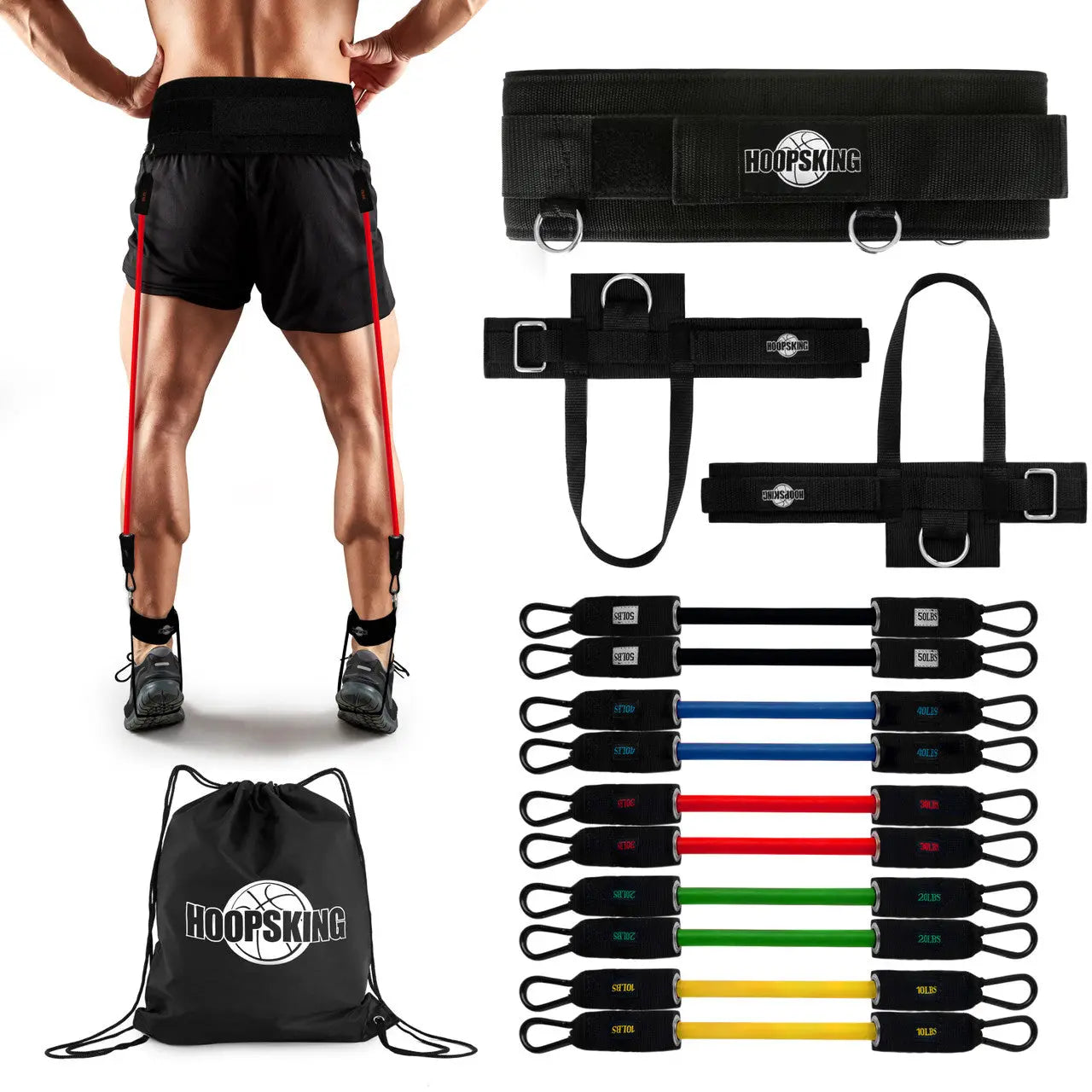
HoopsKing Vertical Jump Trainer Resistance Bands
A waist to heels band system that adds resistance to every jump, so your hips and legs learn to fire harder for a bigger spike and serve.
What drills build a bigger volleyball vertical?
Do this two or three times a week on fresh legs, never after a hard match. Quality over quantity: every jump should be a max effort.
Vertical jump questions players ask
How much can I add to my vertical?
Many players add 3 to 6 inches over a season of consistent strength and jump training. Gains depend on how explosive you already are and how regularly you train.
How often should I do jump training?
Two or three days a week on fresh legs. Explosive work needs recovery, so more is not better. Keep sessions short and intense.
Does the arm swing matter that much?
Yes. A hard double arm swing can add several inches of reach by itself. Train it on every approach jump so it becomes automatic.
Should younger players lift weights to jump higher?
Bodyweight jumps, hops, and band work are safe and effective for most youth players. Add loaded lifting later with proper coaching.
When will I see the gains show up in games?
Expect better pop in 4 to 6 weeks and a clear jump by the end of a focused season. Retest your vertical every few weeks to track it.
Should I jump train on game days?
No. Heavy jump work the day of or right before a match will leave your legs flat. Schedule explosive sessions on lighter days and let your legs be fresh when it counts.
Get above the net this season
Add resisted jump training to your week and turn your approach into real height.
Tags: volleyball, vertical jump, jump training, spike approach, jump serve, resistance bands