

How to Hit a Forehand With More Power Like Carlos Alcaraz
A powerful forehand like Carlos Alcaraz does not come from swinging harder with your arm. It comes from the ground up: you load your legs, rotate your hips and core, and whip the racquet through contact while your hand and forearm stay fast and loose. Alcaraz owns one of the biggest forehands in tennis, and the parts you can copy are his footwork, his hip turn, and his effortless racquet head speed. This guide breaks down where real power comes from and the drills and gear that build it.
Where does forehand power actually come from?
Think of the forehand as a chain that fires from the bottom up. Your legs push against the court, your hips and trunk rotate, that rotation flings the arm forward, and the last link is a fast, relaxed hand that releases the racquet head into the ball. Players who try to muscle the shot break the chain. They swing all arm, the racquet slows down, and the ball floats. The fix is to let the big muscles do the work and keep the hand light so the racquet can accelerate. More racquet head speed, not more grip tension, is what turns a safe forehand into a weapon. The other half of power is timing. If you make contact too late or reach for the ball, the chain fires out of order and the racquet slows down right when it should be fastest. That is why footwork matters so much: getting there early lets you hit the ball out in front, where your rotation and racquet speed meet at the perfect moment.
How does Alcaraz generate so much racquet head speed?
Alcaraz sets up with explosive footwork so he is always balanced and loaded before the ball arrives. From there he makes a full shoulder and hip turn, keeps his off-arm out for balance, and lets the racquet lag behind his hand before it snaps through contact. That lag and release is the secret to effortless power: the racquet whips, it is not pushed. Here is where power really comes from, roughly how much each link contributes, and how to train it.
| Power source | Why it matters | How to train it |
|---|---|---|
| Legs and footwork | Sets the base and loads the shot | Split step and set up early |
| Hip and trunk rotation | The engine of the swing | Shadow swings, medicine-ball throws |
| Lag and release | Turns rotation into racquet speed | Loose grip, let the racquet trail |
| Hand and forearm speed | Final whip through contact | Weighted hand training, wall rallies |
What gear builds hand speed and grip strength for your forehand?
The last link in the chain is your hand, and it is the one most players neglect. Stronger, faster hands and forearms let you keep a loose grip and still control the racquet when it is moving fast, which is exactly how Alcaraz holds his power together. Training with adjustable finger and hand weights builds that strength and quickness without changing your swing. Do a few sets of shadow forehands wearing them, take them off, and your hands feel lightning quick on the real racquet.
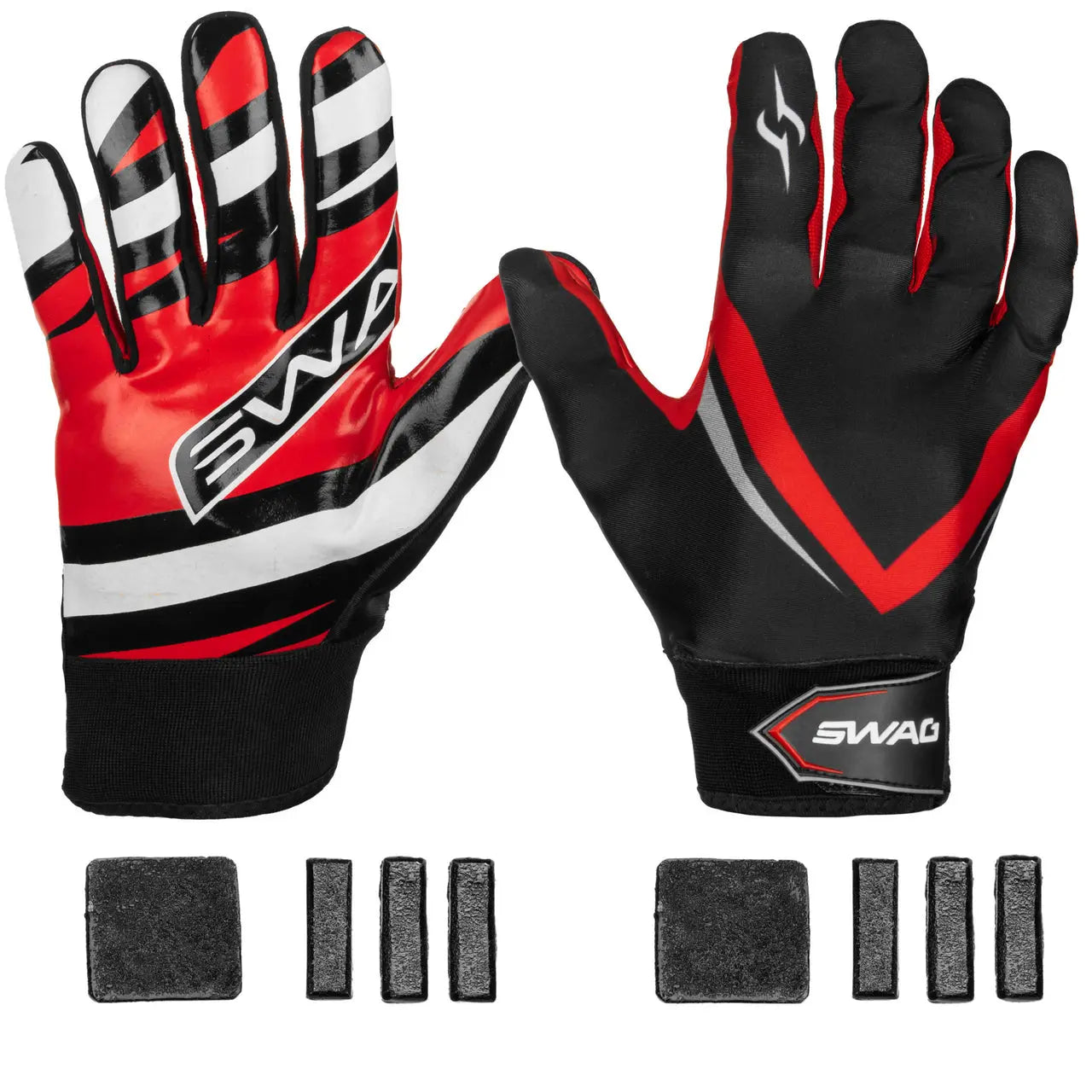
S.W.A.G. Adjustable Weighted Gloves
Adjustable finger and hand weights that build the forearm strength and hand speed behind a faster, more controlled forehand.
What drills build a bigger forehand?
Work these in order, from slow and technical to fast and live. Groove the movement first, then add speed. Rushing to swing hard before the pattern is clean just builds a bigger mistake.
Forehand power questions players ask
Why is my forehand weak even when I swing hard?
Almost always because you swing with your arm and grip the racquet too tight. Let your legs and hips drive the shot and keep the hand loose, and the racquet will speed up on its own.
Do weighted gloves help your tennis forehand?
They build forearm strength and hand speed, which let you keep a relaxed grip and still control a fast racquet. Use them for shadow swings and warmups, not for hitting live balls.
Should I use topspin for more power?
Topspin lets you swing fast and still keep the ball in, which is why Alcaraz hits so big. Brush up the back of the ball and finish high to turn racquet speed into a heavy, safe forehand.
How long until my forehand gets stronger?
Technique can improve in a few weeks of focused reps. Real power that holds up in matches takes a couple of months of footwork, rotation, and hand training together.
What grip should I use for a modern power forehand?
Most big hitters use a semi-western grip. It lets you swing up the back of the ball for topspin and power at the same time. If you are on an eastern grip and struggling to add pace, shifting slightly toward semi-western is often the unlock.
Faster hands. Bigger forehand.
Build the strength and speed behind every swing and let the racquet do the work.
Tags: tennis, forehand, racquet head speed, Carlos Alcaraz, weighted gloves, hand speed