



How to Hit a Forehand with More Power and Racket Speed
A heavy forehand comes from racket head speed, not from muscling the ball. You build that speed by loading your legs and core, then whipping the racket through contact with a relaxed arm. Train the full chain, add a little resistance to speed up your hand and forearm, and the ball starts jumping off your strings. The video below breaks down exactly how the best players create explosive racket speed on the forehand.
Where does forehand power come from?
Power on the forehand is built from the ground up through what coaches call the kinetic chain. It starts with your legs pushing into the court, moves through hip and shoulder rotation, and finishes with a loose arm that whips the racket through the ball. The biggest mistake amateurs make is trying to swing hard with the arm alone, which tightens everything and actually slows the racket down. Stay relaxed, let the bigger muscles do the work, and let the racket head lag behind your hand before snapping through contact. That lag and release is where the free pace lives.
How do you get both power and control?
More pace is useless if the ball flies long. Topspin is what lets you swing fast and still keep the ball in. Here is where power comes from and the mistake that kills it at each stage.
| Element | How to add power | Common mistake |
|---|---|---|
| Legs | Load and push up into the shot | Standing tall and arming the ball |
| Rotation | Turn hips and shoulders fully | Opening up too early |
| Arm | Stay loose and let the racket lag | Tensing up and muscling it |
| Contact | Meet the ball out in front | Late contact behind the body |
| Finish | Brush up and around for spin | Flat swing with no net clearance |
What gear builds racket head speed?
Racket head speed depends on fast, strong hands and forearms. Training with light finger weights builds that hand and wrist speed, so when you take them off your swing feels quicker and your racket snaps through contact with more pop.
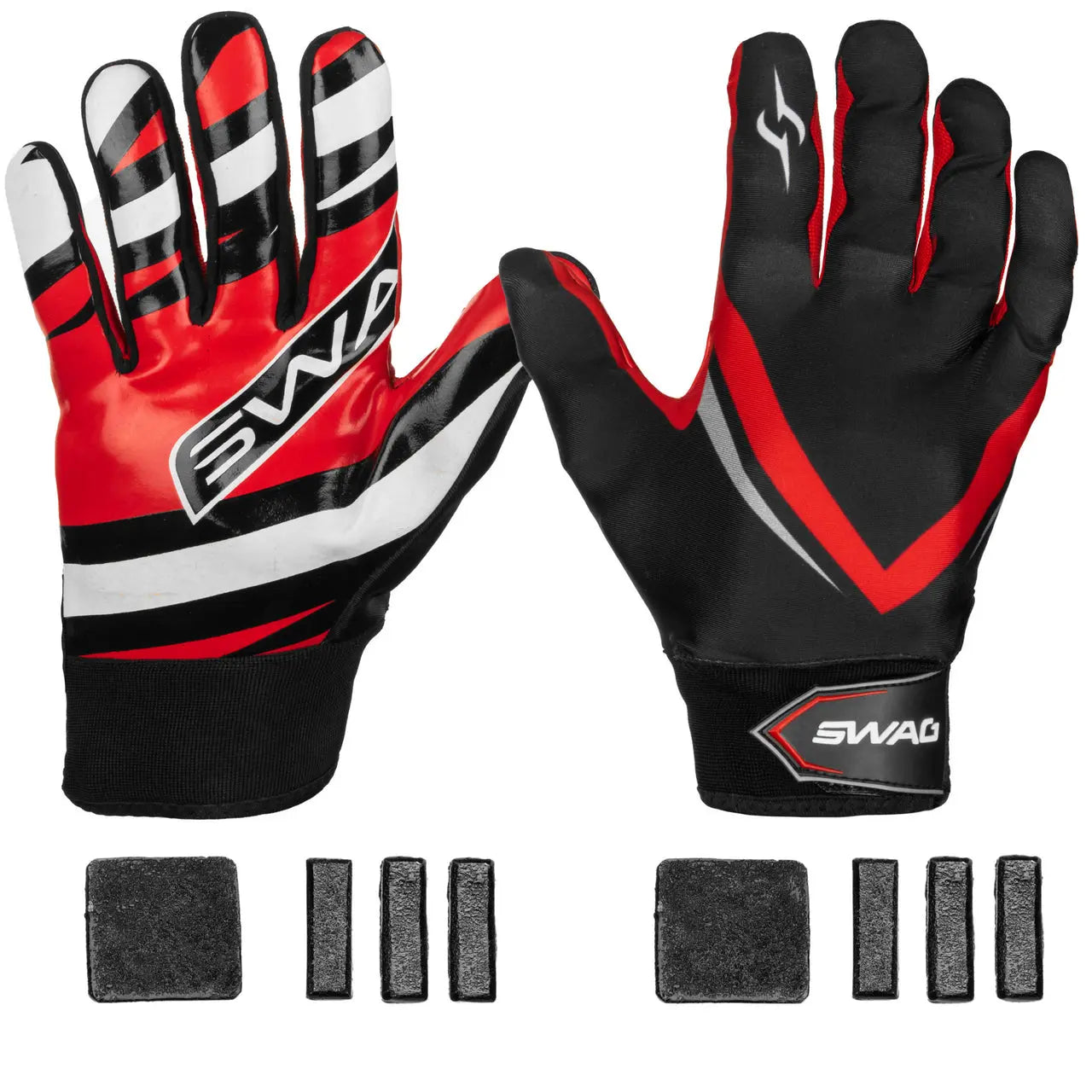
S.W.A.G. Adjustable Weighted Gloves
Adjustable finger weights build the hand, wrist, and forearm speed behind an explosive, whippy forehand.
What drills build a bigger forehand?
Groove these in practice before you chase pace in a match. Start slow, feel the chain fire in order, then let it rip.
Forehand power questions coaches ask
Should I hit flat or with topspin for power?
Topspin. It lets you swing fast and still bring the ball down into the court, so you get pace without spraying it long.
Do weighted gloves really help?
Yes. Building hand, wrist, and forearm speed carries over to faster racket head speed once you take the weights off.
What grip gives the most power?
Most powerful modern forehands use a semi western grip, which supports both racket speed and heavy topspin.
How do I add pace without losing control?
Add speed gradually, keep contact out in front, and finish with a brush up the back of the ball for spin.
Build a forehand that jumps off the strings
Train faster hands and let your racket do the work.
Tags: tennis, forehand, racket head speed, power, tennis training, weighted gloves