



How to Block in Volleyball: Footwork and Hand Position
To block in volleyball, you get to the ball with fast, clean footwork, jump straight up at the right time, and press your hands over the net to seal off the hitter's angle. Great blocking is footwork first. If your feet get you square and balanced, your hands can do their job. If your feet are late, even a big vertical will not save the play. Below, a coach walks through middle blocker footwork, and then we give you drills to close the block and take away the hardest swings.
What makes a great volleyball block?
A great block does two things. It stops the ball outright for a point, and even when it does not, it channels the hitter into your defense so your diggers know exactly where the ball is going. Both jobs start with getting square to the hitter. When your shoulders face the attacker and your body is balanced, you can press your hands to the ball and seal the net. When you drift sideways or jump off balance, you leave seams and get tooled off your hands.
The three keys are footwork, timing, and hand position. Footwork gets you there. Timing means you jump just after the hitter so you meet the ball at its peak. Hand position means you reach over the net, spread your fingers, and press toward the middle of the court to take away the angle. Master those three and you will block far above your standing reach.
Which blocking footwork should you use?
The distance you have to cover decides which footwork to use. Pick the pattern that gets you square without rushing, then finish with a strong two foot takeoff.
| Footwork | Distance covered | Best for |
|---|---|---|
| Standing step | Short, one step or less | A quick middle attack right in front of you |
| Step close (two step) | Medium | Most middle blocker situations |
| Crossover (three step) | Long, sideline to sideline | Closing to the pins from the middle |
Whatever pattern you use, the last step squares your hips to the net and stops your momentum so you jump up, not sideways.
How do you get faster closing the block?
Closing the block is a lateral quickness skill. The blockers who shut down the pins are the ones who move sideways fast, stay balanced, and get their outside foot planted in time. Training with ankle resistance overloads that exact lateral shuffle and first step, so when you take the resistance off your feet feel light and quick along the net. A few minutes of resisted footwork before practice pays off fast.
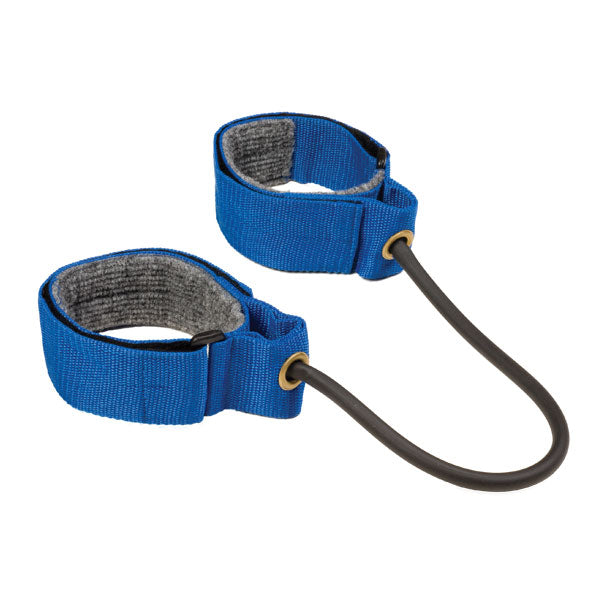
Lateral Resistor
Ankle strap resistance trains the lateral shuffle and first step blockers use to close to the pins and stay square.
What drills improve your blocking?
Work these in order. Groove the footwork with no ball first, then add reads and live hitters.
Blocking questions coaches ask
When should I jump to block?
Jump just after the hitter, not with the set. Against a fast quick attack you jump sooner, and against a high outside set you wait a beat so you meet the ball at its peak.
How do I stop getting tooled off my hands?
Press your hands over the net, spread your fingers, and turn your hands in toward the middle of the court. Square shoulders and firm wrists keep the ball in bounds.
Do I need to be tall to block well?
Height helps, but timing, footwork, and a strong press let shorter players block above their reach. Fast feet and a good jump beat height that is late.
How can I close to the pins faster?
Train lateral quickness and your crossover step. Resisted footwork and clean patterns get your outside foot down in time to square up.
Own the net with faster feet
Train the lateral quickness that closes the block and shuts down the pins.
Tags: volleyball, blocking, middle blocker, footwork, net play, volleyball drills